🐐THE GAMBOL
October 25, 2026 • 📍Würzburg, Germany• 🚢 Rhine & Main Explorer +
📇 THE STORY
Here is what I love about Viking: If you don’t ship swap 😁, you don’t have to pack and unpack; they arrange the transportation; you can get your own guide for tours if you so choose; there is always food available; plenty of wine and beer to drink without the silver spirits package. And yet, we are herded through towns and villages like cats. The guides are, for the most part, really good and have stories and convictions and baggage and that comes through in their spiels. The guides want to share their stories, but there is never enough time to see everything. Sure there are some days we can stay longer in a port and see more of the village or town, but then we would miss nap time 🤣, and we can’t have that!
So, here we are in Würzburg, a town that still has bullet holes in some of the walls from WWII, a town that was 82% destroyed during the March 16th bombardment in 1945. Our guide today is Alex. She is a fairy or an elf, I couldn’t decide. She was born in California, but her mom was a military brat and liked to move around and Alex ended up in Germany. She was a history major and is now studying linguistics. She is young, about Charlie’s age, and very opinionated. I think she struck a nerve with some of our group, but she was very knowledgeable, excitable, and truly loves what she does. Alex explained the difference between a church, a chapel, and a cathedral. The Marienkapelle was a chapel, there was no congregation and was built on the site of a Jewish synagogue in the late 1300s.
There are 2 other buildings Würzburg is known for, perhaps you know? The Würzburg Residence, home of the Prince-bishops of Würzburg-Mostly from the Shönborn family line, and the Marienberg Fortress. There was not enough time in the day to visit both and the small Fall festival going on in the market place, and the little winery with tastings that happened to be opened on Sunday. So Alex took us to the Residence.
Alex asked us politely not to take pictures during her tour. I think because there are so many people doing tours of the residence, the administration tries to move them through so there aren’t large groups just clustered around where others can’t get by. This doesn’t mean you can’t take pictures, just do it after your tour. Let me tell you, the pictures don’t do the place justice. The Tiepolo fresco is the largest continuous fresco there is. And Tiepolo couldn’t make it as a fresco painter in Italy. Alex showed us all the discrepancies in his painting. From the grand staircase and past the fresco, one enters the White Room. At first, all you notice is WOW! It looks like an overdone wedding cake, and then your guide urges you to look closely at the sculptures: notice the the god and goddess of war, the swords, the slaves chained…. hmmmm not as innocent and white as you would think. From there you walk into the dining hall with its lavish color. Look at the stone… not marble, colored clay plaster costing more, because of the technique than the marble would have cost. So many more rooms, no more stories from Alex, it is time to digest, process, and take pictures. Then move on.
📸 THE PHOTOS
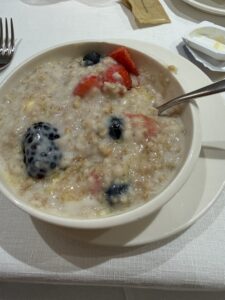
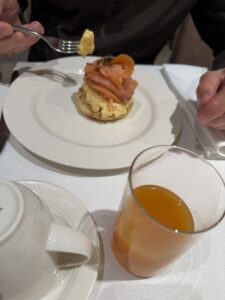
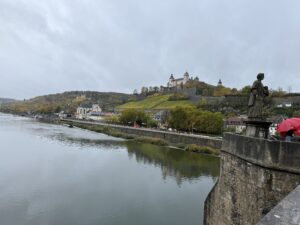
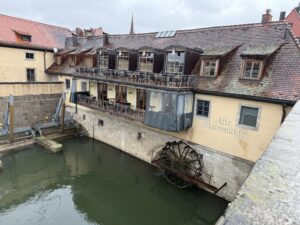
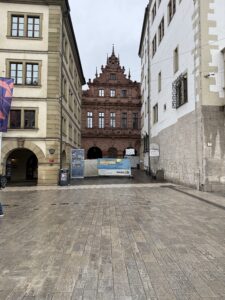
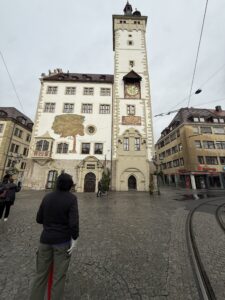

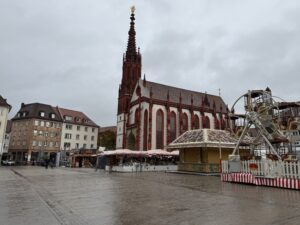
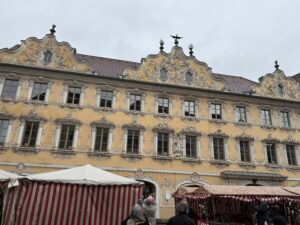
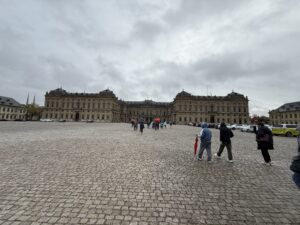
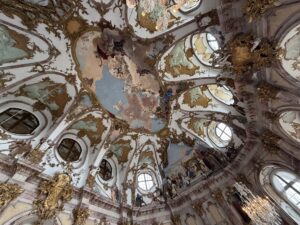
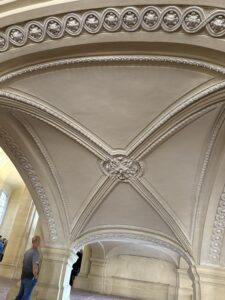
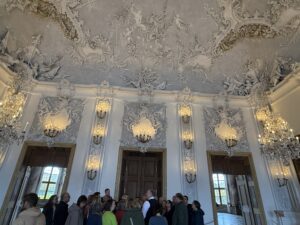
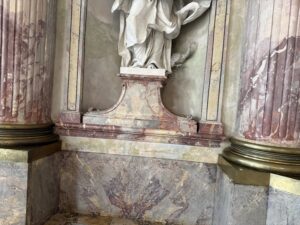
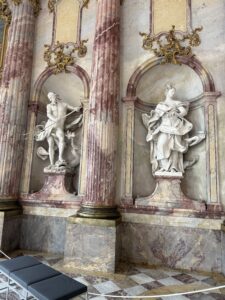
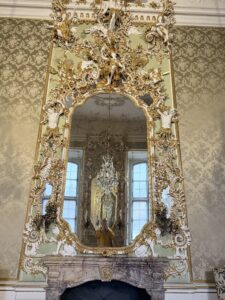
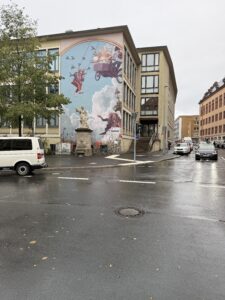
We did not venture into the gardens or the chapel, and of course it was raining. Alles gut! Jim gets out his trusty google map, and off we set on our adventure. Today is not about the beer, but about the wine. Würzburg is known for its Silvaner wine, a white wine .
“Silvaner vines were first planted in Castell near Würzburg as early as 1659. Word of its merits spread quickly. The largest Silvaner region is Rheinhessen, where the grape variety covers about 8 percent of the area. Silvaner is considered one of the leading grape varieties in Rheinhessen, and its quality potential is explored year after year.
The growing region with the highest proportion of Silvaner is Franconia, where the grape variety grows on about a quarter of the vineyard area. In the region’s list of grape varieties, Silvaner is back in first place for the first time since 2019. Depending on the terroir and microclimate, however, Silvaner has a much higher ranking in the individual Franconian vineyards, because the Franconian flagship grape variety produces very special wines on the shell limestone and Keuper soils.” (Silvaner vines were first planted in Castell near Würzburg as early as 1659. Word of its merits spread quickly. The largest Silvaner region is Rheinhessen, where the grape variety covers about 8 percent of the area. Silvaner is considered one of the leading grape varieties in Rheinhessen, and its quality potential is explored year after year.
The growing region with the highest proportion of Silvaner is Franconia, where the grape variety grows on about a quarter of the vineyard area. In the region’s list of grape varieties, Silvaner is back in first place for the first time since 2019. Depending on the terroir and microclimate, however, Silvaner has a much higher ranking in the individual Franconian vineyards, because the Franconian flagship grape variety produces very special wines on the shell limestone and Keuper soils.Silvaner vines were first planted in Castell near Würzburg as early as 1659. Word of its merits spread quickly. The largest Silvaner region is Rheinhessen, where the grape variety covers about 8 percent of the area. Silvaner is considered one of the leading grape varieties in Rheinhessen, and its quality potential is explored year after year.
The growing region with the highest proportion of Silvaner is Franconia, where the grape variety grows on about a quarter of the vineyard area. In the region’s list of grape varieties, Silvaner is back in first place for the first time since 2019. Depending on the terroir and microclimate, however, Silvaner has a much higher ranking in the individual Franconian vineyards, because the Franconian flagship grape variety produces very special wines on the shell limestone and Keuper soils. (Wines of Germany)
Now that we have that taken care of let’s talk about the bottles. Not only is Würzburg known for its wine, it is also known for its bottles. So in the mediaeval times, there weren’t many bottles, so being the fruga sort of people they were, they used what they had. What they had were goats. What goats had were big balls. That of course is not the official story… but the one most fun!
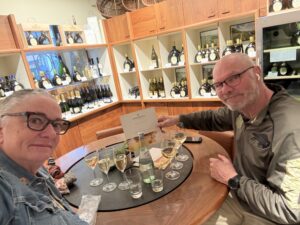
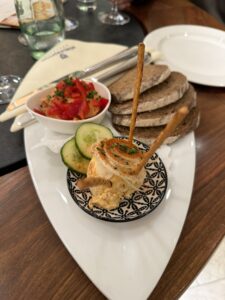
Jim, bless him!, had found a wine shop open on Sunday, that was not the tour Viking was doing in the afternoon. Hanna was our tasting guide. Not only did they have a white wine tasting, but also a sect (bubbly tasting). So of course we did both! Needed a little fortification as the wine tasting was not 3 little sips of wine, but 3 full glasses of wine. We chose the obatzda, think cheese ball, and a piquant, or spicy version. Not really spicey but with a little oomph both served with dark rye.


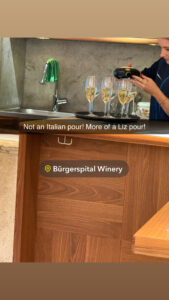
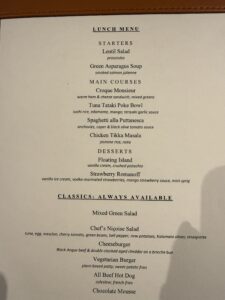
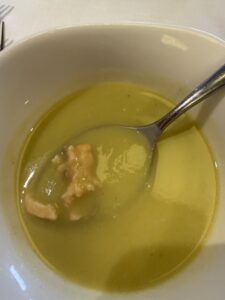
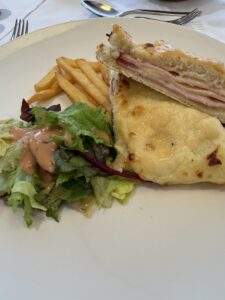
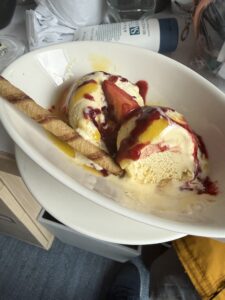
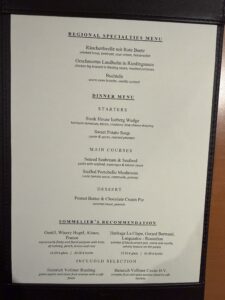
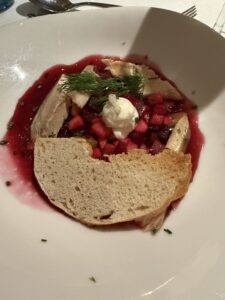
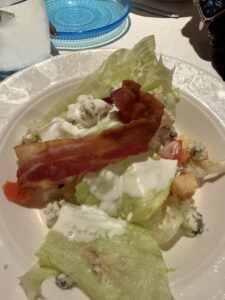
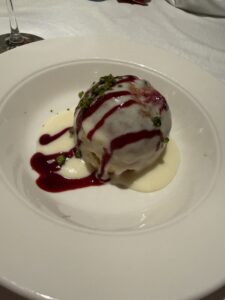
Time to go back to the boat for lunch… because we haven’t eaten anything for the last week. Nap, and of course drinks, snacks, and dinner. We did eat more for dinner than I took pictures of.. not sure how that happened. We must have been hungry 🤣
#HowFortunateWeAre #RetiredAndLovingIt #MakingOurOwnSunshine